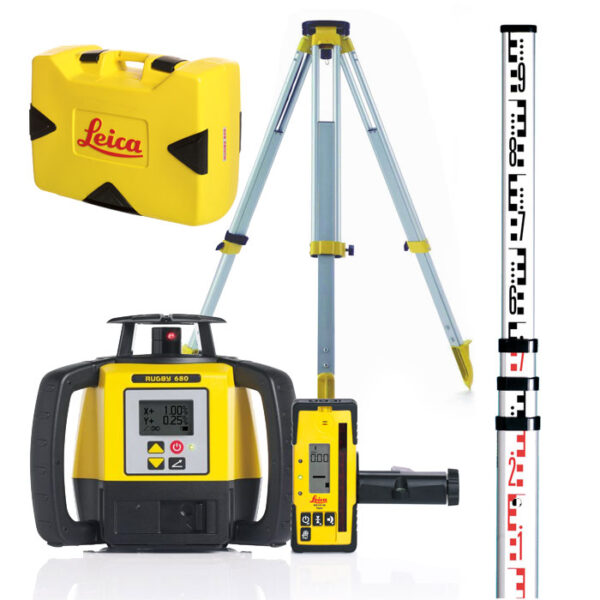
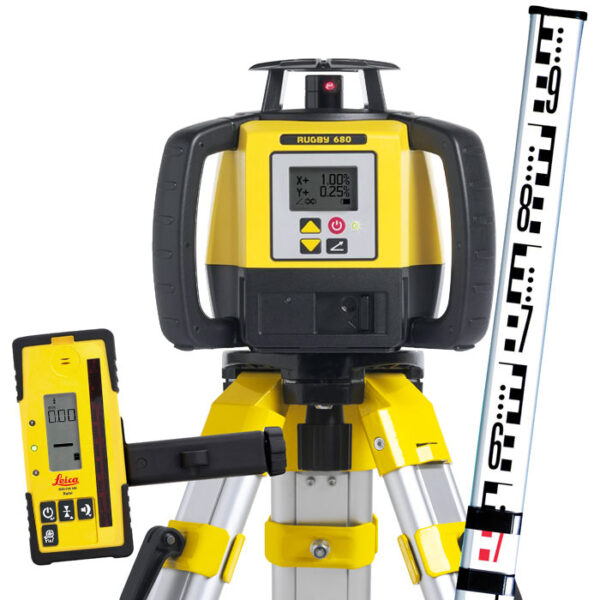
Choosing the Right Rotary Laser Level Kit for Drainage & Landscaping

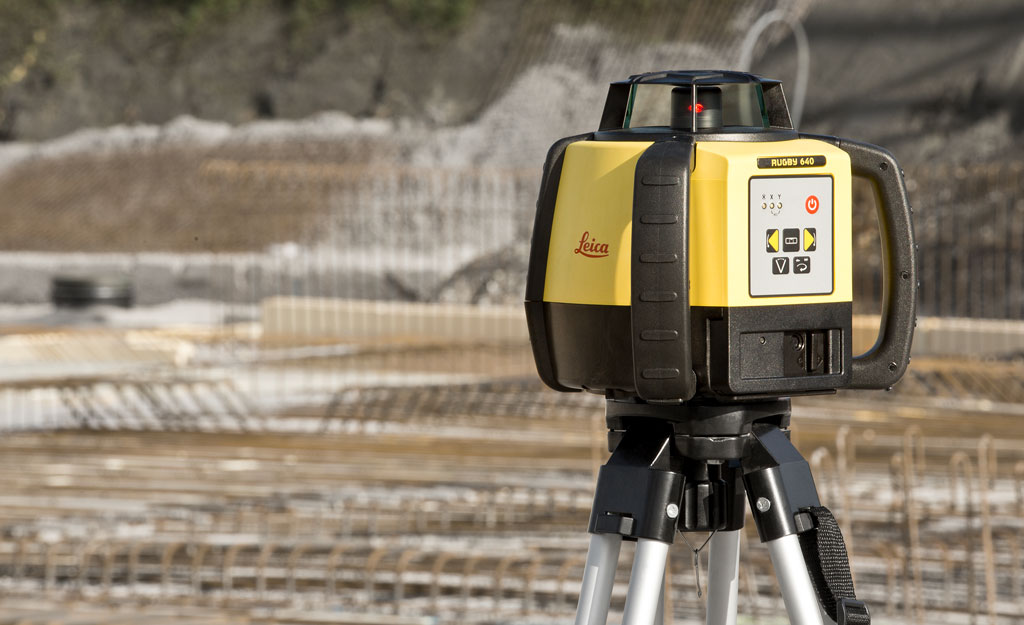
PROFESSIONAL GUIDE
Overview
Drainage, landscaping, and general groundworks require a robust, accurate, and outdoor‑ready rotary laser level. Many cheaper, non‑branded kits fail quickly because they are not engineered for real site conditions. Below is a complete breakdown of the features you must look for — and why they matter.
- Accurate over 50–500m
- Designed for groundworks, drainage, patios, oversites, and landscaping
-
Maintain calibration under vibration and temperature changes longer
- Weak motors → calibration drifts
- Poor bearings → wobble at high RPM
- Thin housings → shock damage
- No proper sealing → moisture kills the pendulum
- Limited range → often only 10–20m outdoors
- IP67: Fully dust‑tight + protected against temporary immersion
- IP68: Fully dust‑tight + protected against continuous immersion
-
Protects the pendulum and electronics – The Internal Levelling parts
- Prevents moisture ingress (the #1 killer of cheap lasers)
- Ensures long‑term accuracy
- Allows use in all weather conditions
- Ensures accuracy
- Prevents incorrect readings if the tripod is knocked
- Maintains consistency over long drainage runs
You need a receiver and a laser with proper outdoor range.
- Drainage trenches often run 20–40m
- Landscaping covers entire gardens or plots
- Sunlight requires a strong beam + quality detector
This is a key area where the market has evolved – and where you gain a massive advantage.
-
Detects the laser beam using a photodiode strip
- Gives up / down / on‑grade indications
-
Specifically built to work with either red or green rotary lasers
- Essential for outdoor levelling where the beam is invisible
- Only tells you if you are high, low, or on level
- No measurement of how much high or low
- Requires manual interpretation and adjustment
The market is now recognising the value of digital receivers (e.g., Leica Rod Eye Digital, Combo Smart Capture Receiver, Geo Fennel FMR60 and FMR80 Digital Receivers).
What It Does
- Shows exact mm difference from the laser plane
- Identifies high and low spots instantly
- Speeds up grading, levelling, and drainage work
- Reduces rework and improves accuracy
- Allows one person to set levels with survey‑grade precision
Why It’s a Game‑Changer
- Perfect for identifying high spots, low spots, and required cut/fill
- Essential for drainage where fall must be consistent
- Great for patios, driveways, and landscaping profiles
- Eliminates guesswork
This is the biggest leap forward in rotary laser usability in the last decade.
- Lets you dial in a precise slope
- Ensures consistent fall over long distances
- Saves time compared to manual drop calculations
- Stability = accuracy
- Prevents constant re‑levelling
- Ensures consistent readings
- No downtime
- Rechargeable packs + alkaline backup are ideal
- Cheap lasers often last only 3-5 hours
FEATURE |
WHY YOU NEED IT |
WHAT CHEAP KITS DO WRONG |
|---|---|---|
| Rotary laser | Long‑range outdoor levelling | Weak motors, poor calibration |
| IP54–IP66 | Rain, mud, dust protection | Poor seals, moisture ingress |
| IP67–IP68 (Leica) | Extreme durability, immersion protection | Not available in cheap kits |
| Self‑levelling | Accuracy + safety | Drift without warning |
| 150–500m range | Drainage & landscaping | 50–60m real range |
| Standard detector | Detects the beam outdoors | Slow, inaccurate |
| Digital mm receiver | Shows exact high/low measurements | Not included in cheap kits |
| Slope mode | Set drainage fall | Manual tilt only |
| Rugged tripod | Stability | Wobbly, thin legs |
| Long battery life | All‑day use | 3–5 hours |
For drainage, landscaping, and groundworks – and to avoid the failures seen with cheap kits — choose a mid‑to‑pro‑grade rotary laser with:
-
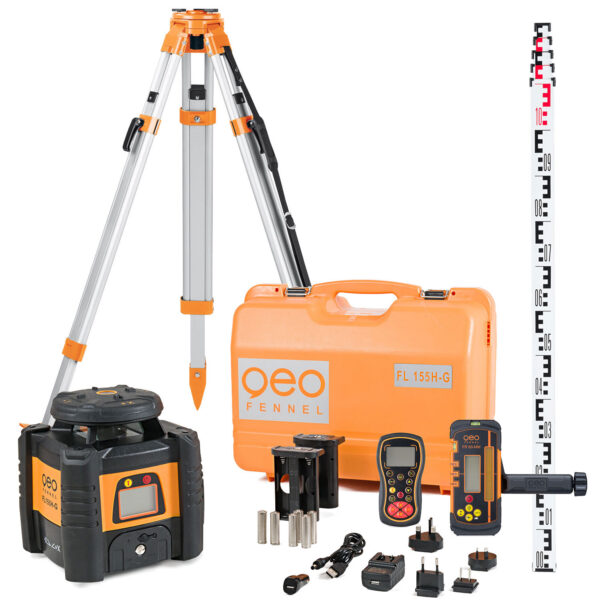
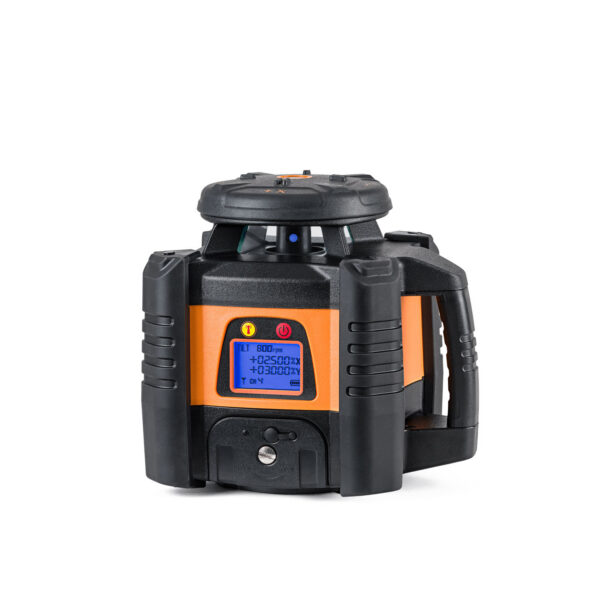
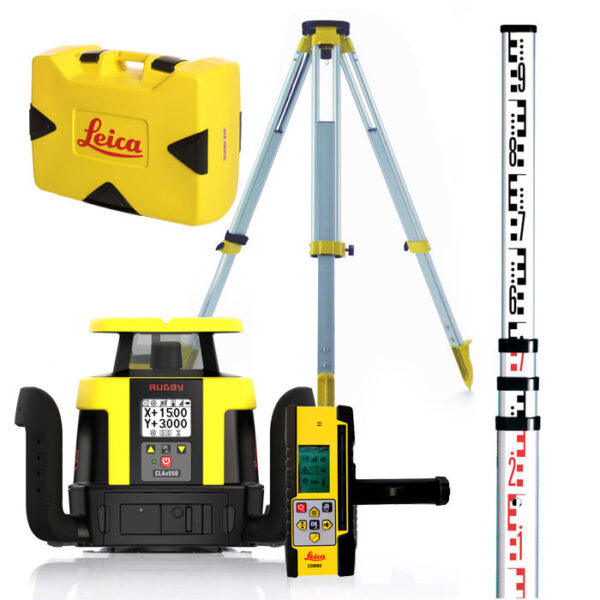
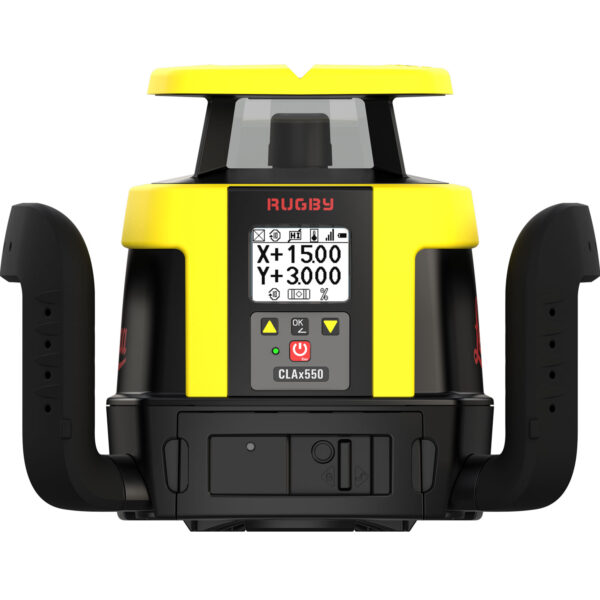
IP65+ minimum, ideally IP67/IP68 (Leica Geosystems) LaserLiner or Geo Fennel
- 150–500m range
- Self‑levelling
- Digital mm receiver
- Rugged tripod and staff
- Optional slope mode